
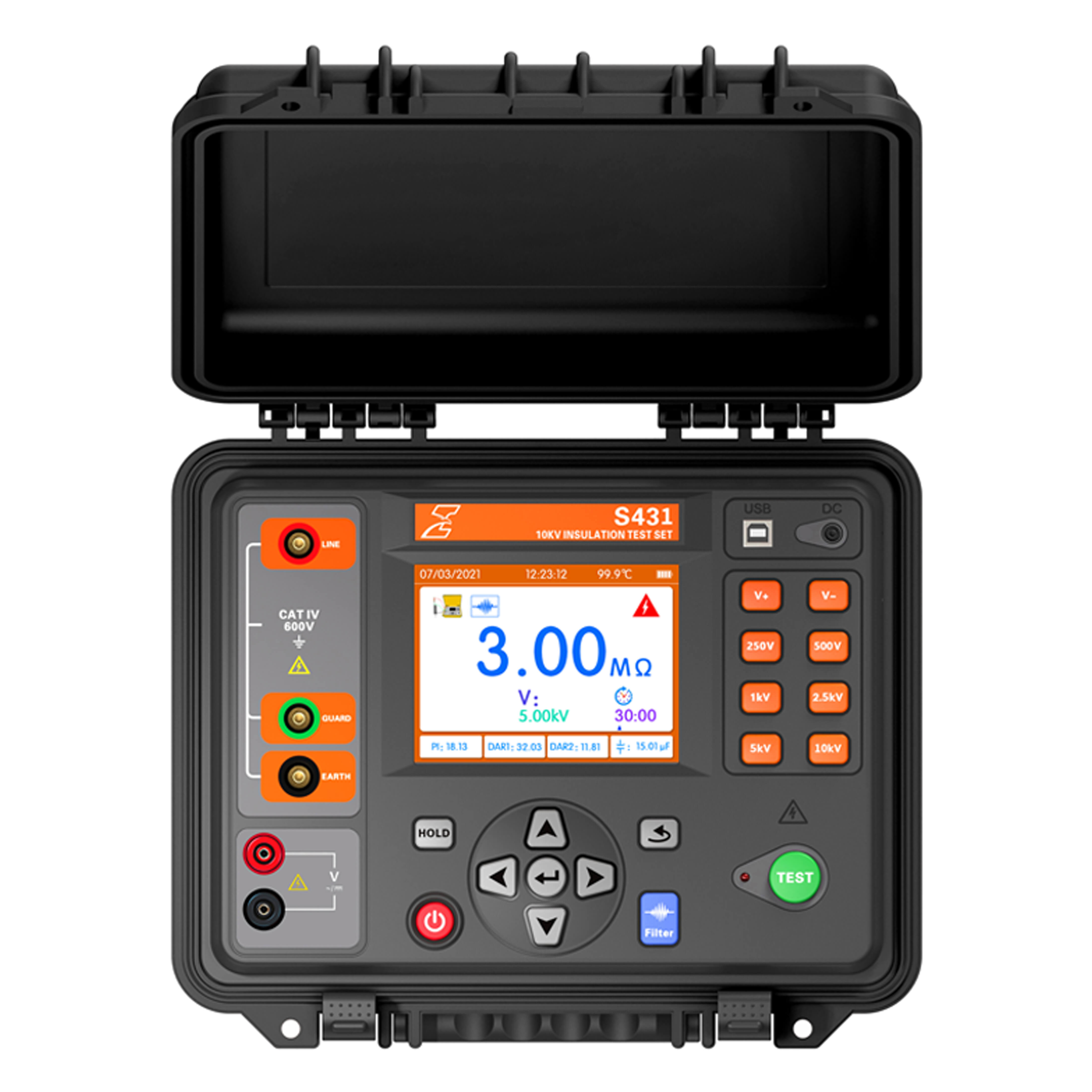
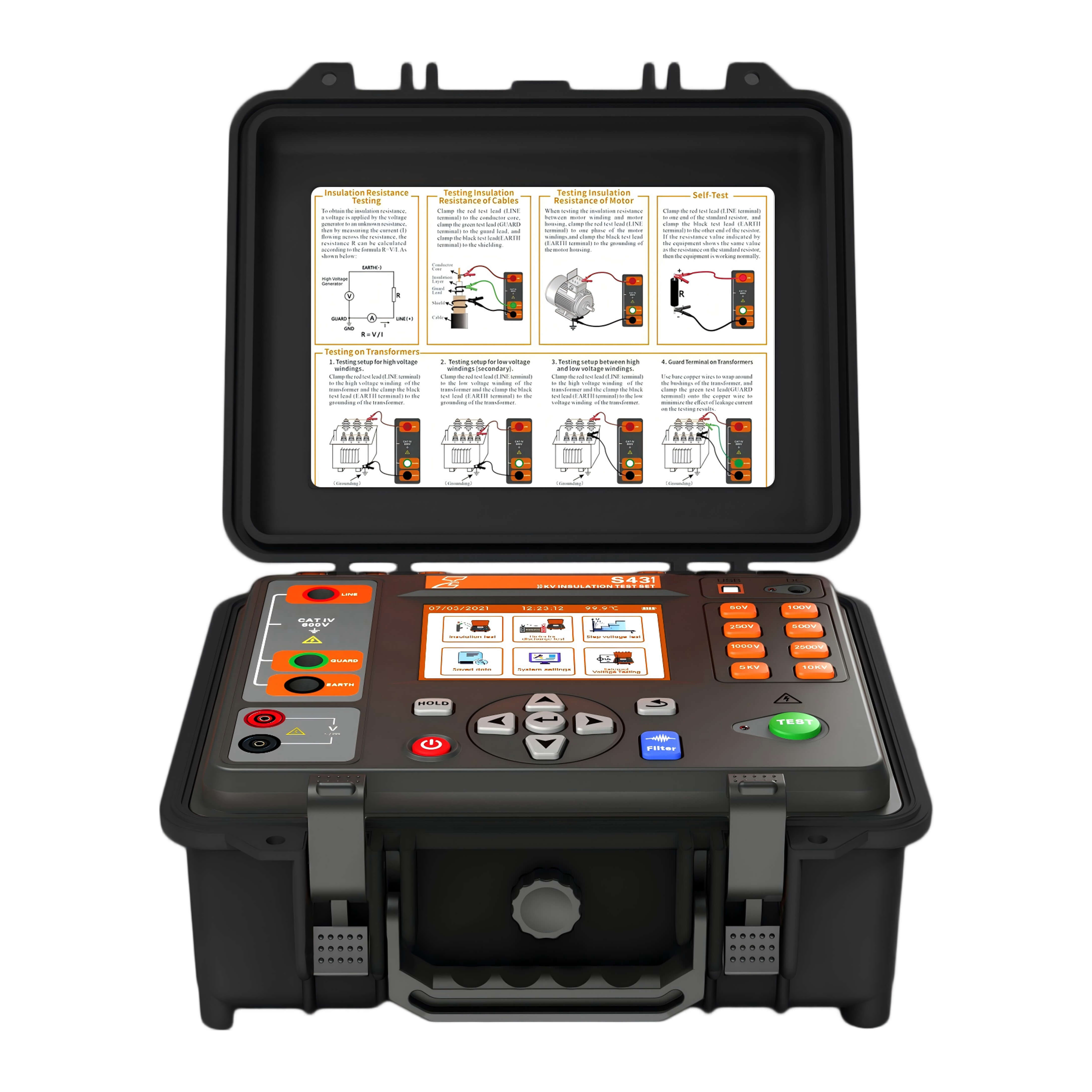
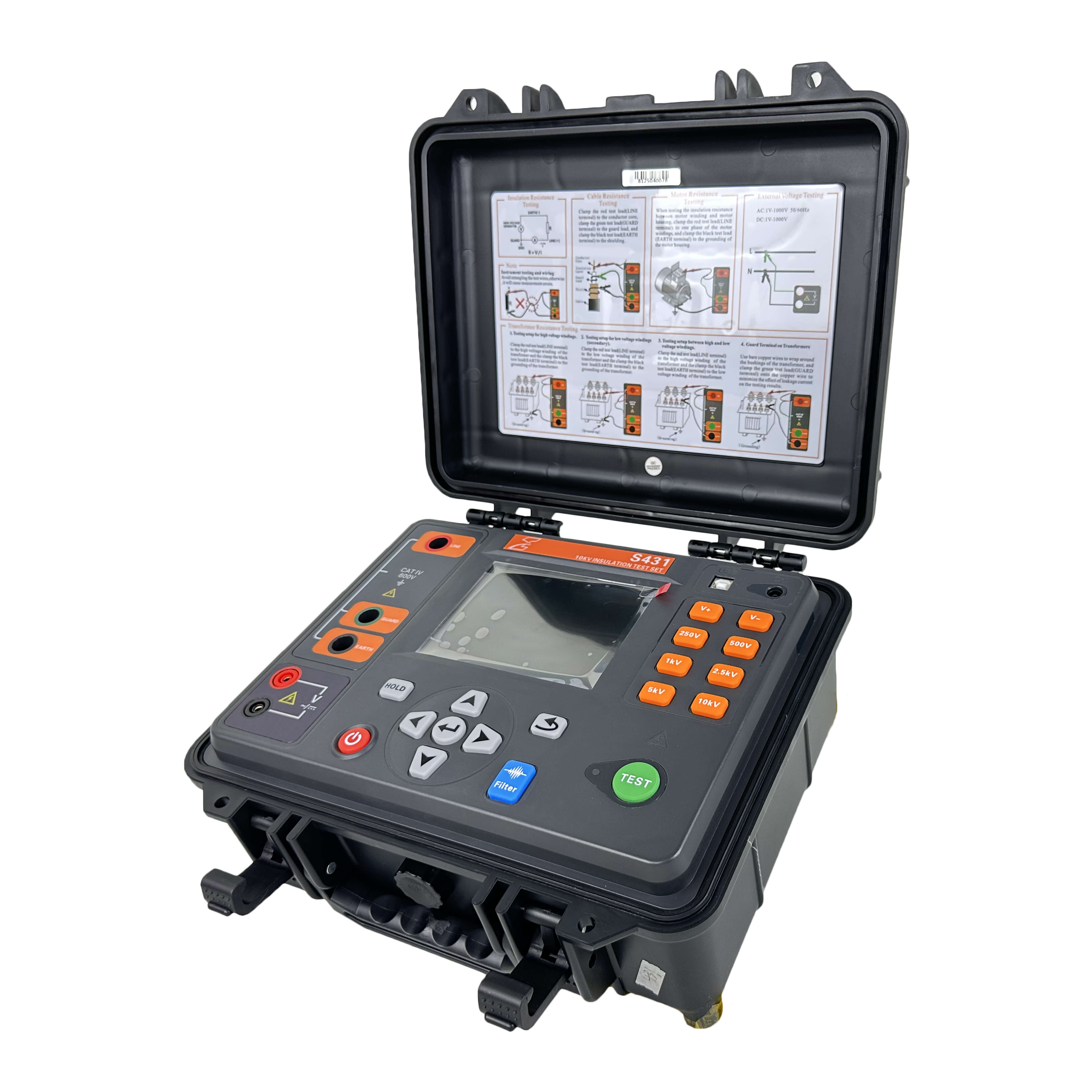
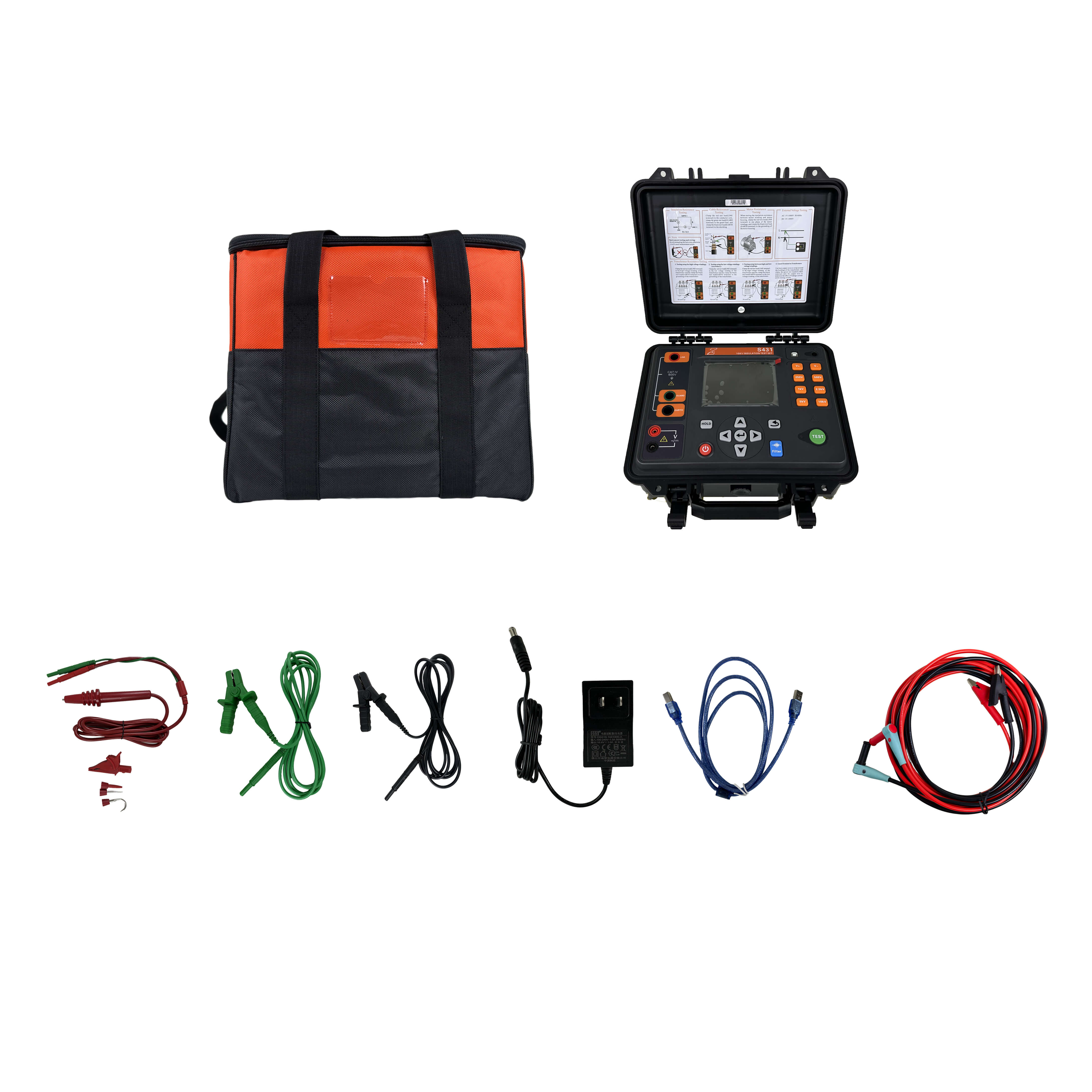
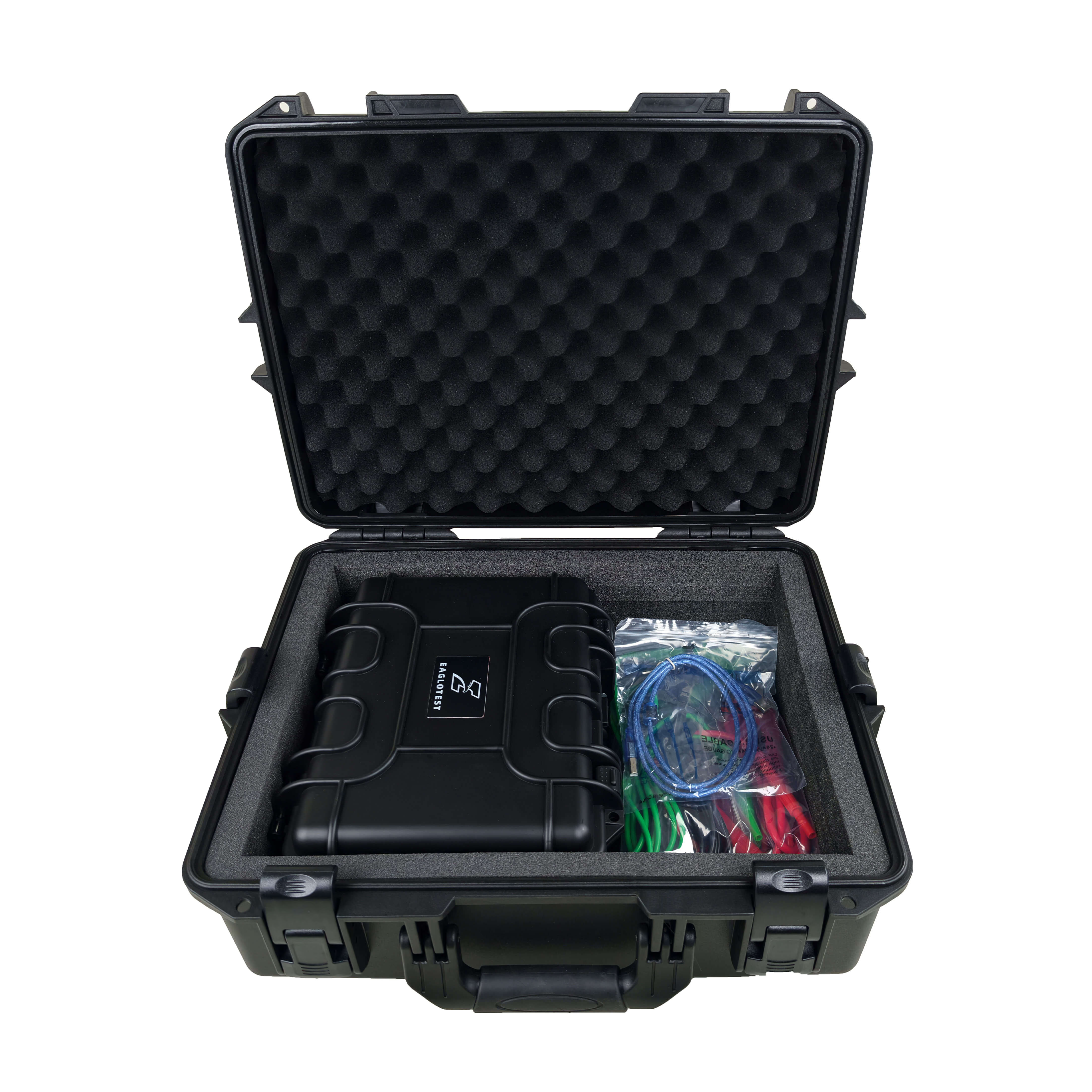
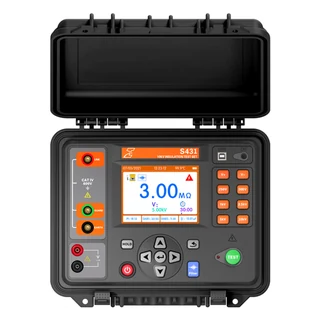
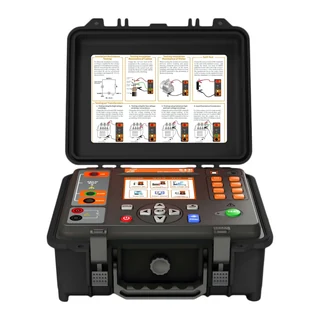
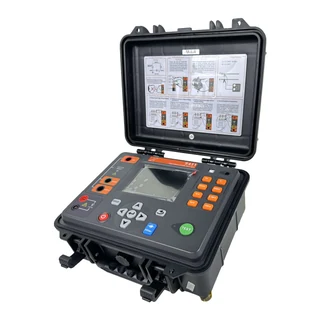
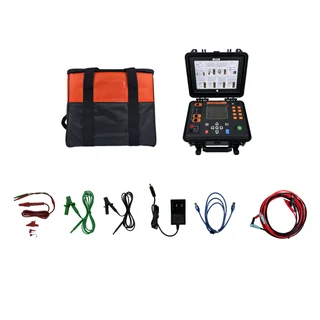
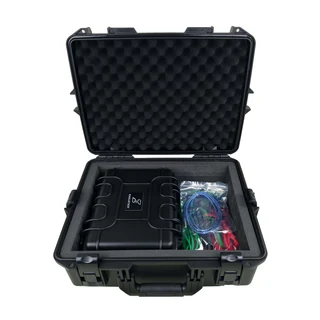
S431 10KV Insulation Test Set

  • Multi-Voltage Test Output (250V to 10kV / 0.01MΩ Resolution)

  • Ultra-Wide Resistance Measurement Range (0.01MΩ to 20.00TΩ)

  • High Short-Circuit Charging Current (≥5mA Output)

  • Automated Diagnostic Test Modes (IR, PI, DAR, DD, SV & Ramp)

  • Active Noise Rejection & Guard Terminal Shielding (4-Level Filter)

  • Integrated Auto-Discharge & Circuit Protection (CAT IV 600V / IP54)

  • High-Capacity Data Storage (1,000 Datasets) & Field Connectivity


Product Description

Measuring the insulation resistance and dielectric integrity of high-power transformers, high-voltage rotating machinery, cables, and inductive apparatus is critical for operational safety and

predictive maintenance. The S431 10kV Insulation Resistance Tester & Digital Megohmmeter is engineered to tackle complex field testing challenges with high speed, 0.01 MΩ resolution,

and maximum operator safety.


Designed as a rugged, high-performance solution for electrical utilities and industrial diagnostics, the S431 extends its insulation resistance measurement range from 0.01 MΩ up to 20.00 TΩ.

his ultra-wide range allows field engineers to test both low-voltage distribution assets and extra-high-voltage (EHV) grid apparatus with a single, portable unit.


Key Advantages & Performance Highlights:

  • High-Precision Voltage Output & Short-Circuit Current: Features 6 selectable test voltages (250V, 500V, 1kV, 2.5kV, 5kV, and 10kV) with ≥5 mA short-circuit current to rapidly charge large

    capacitive apparatus and deliver stable readings during field diagnostics.

  • Extended 20.00 TΩ Resistance Range: Covers a broader scope of applications, from power transformer windings and EHV underground cables to high-voltage generators, CT/PT units, and

    metal-clad switchgear assemblies.

  • Automated Multi-Mode Diagnostics: Automatically conducts Insulation Resistance (IR), Polarization Index (PI), Dielectric Absorption Ratio (DAR), Dielectric Discharge (DD), Step Voltage (SV),

    and Ramp Voltage testing to evaluate complex multi-layer dielectric insulation.

  • Active Noise Rejection & Guard Shield Terminal: Built with 4 selectable noise rejection filters (10s, 20s, 30s, 40s) and a dedicated 3-terminal Guard connection that channels stray surface

    leakage currents away from the measuring circuit in high-noise or humid substation environments.

  • Dual Safety Discharge & Comprehensive Operational Utility: Features an active automatic capacitive discharge protection system, CAT IV 600V safety rating, and IP54 weather-sealed casing,

    making it ideal for commissioning acceptance testing, routine predictive maintenance, major overhauls, and urgent fault investigations.


Technical FAQ
Which equipment can be tested with the digital megohmmeter?
The digital megohmmeter is designed for insulation testing and preventive maintenance of motors, transformers, switchgear, cables and other power apparatus. It measures insulation resistance, leakage current and capacitance, and also provides external AC/DC voltage measurement. The 10 kV capability allows it to support procedures that specifically require test voltages above 5 kV, but the selected voltage must always follow the applicable standard, asset manufacturer and approved test plan.
How does the S431 10 kV Insulation Test differ from the S430 5 kV Insulation Test?
The S431 10 kV Insulation Test adds a 10 kV test range and extends the maximum insulation-resistance range to 20.0 TΩ. The S430 5 kV Insulation Test provides output up to 5 kV, has a 10.0 TΩ maximum range and includes a 100 V setting that is not provided on the S431. Both models otherwise share the principal diagnostic functions, automatic discharge, filtering, storage and connectivity features.
What test voltages and insulation-resistance range does the Insulation Resistance Tester provide?
The Digital Megohmmeter provides 250 V, 500 V, 1 kV, 2.5 kV, 5 kV and 10 kV DC test voltages. Its overall insulation-resistance range is 0.01 MΩ to 20.0 TΩ; the maximum available range depends on the selected voltage, and 20.0 TΩ is available on the 10 kV range. From 250 V to 5 kV, the lower resistance bands are specified at ±3% rdg ±5 dgt and the upper bands at ±15% rdg ±5 dgt. At 10 kV, 0.01 MΩ to 400 GΩ is ±5% rdg ±5 dgt and 400 GΩ to 20.0 TΩ is ±20% rdg ±5 dgt.
How are PI and DAR calculated, and what do they indicate?
The default PI calculation is R10min / R1min. DAR1 is R60s / R15s, and DAR2 is R60s / R30s ; the PI timing can also be configured. DAR provides a shorter-term view, while PI is more suitable for large-capacitance assets or insulation with a longer absorption process. PI and DAR are mainly indicators of moisture and contamination and cannot identify every type of insulation defect.
When should the GUARD terminal be used?
Use the GUARD terminal when unwanted surface leakage would distort the resistance of the insulation path being measured. The GUARD connection diverts that leakage current around the sensitive measurement circuit, which is particularly important at very high resistance values. GUARD is not protective earth: the EARTH terminal is the measurement return, and the correct L-E-G connection depends on the asset and the insulation path under test.